


Cornelius Krieghoff
 "There is hardly a Canadian home without some memento of him."
Obituary for Cornelius Krieghoff
"There is hardly a Canadian home without some memento of him."
Obituary for Cornelius Krieghoff
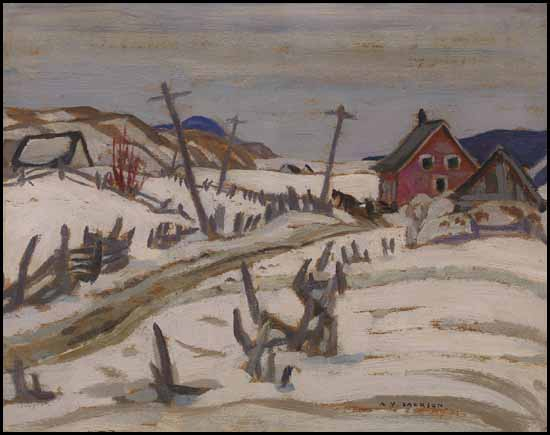
Cornelius Krieghoff was perhaps the finest artist to describe Canadian life in the mid-nineteenth century. Best described as a genre painter and a romantic realist, Krieghoff was not a documentarian. His compositions frequently magnify the drama of nature, emphasizing the beauty of the environment and the character of his human subjects. His paintings are not uncommonly infused with a levity which contrasted with the harshness of life in the "New World".
Cornelius David Krieghoff was born in Holland in 1815 and grew up in Bavaria. He sailed for North America in 1837, where he joined the U.S. Army and, apparently, was dispatched to a group fighting the Seminole Wars in Florida. Legend has it that he enrolled for a second tour of duty, received some advance pay and immediately went north, relocating to the Montreal area, specifically to Boucherville on the South Shore. There, he married a Francophone, Emilie Gauthier. Records available at the Louvre as well as at other Paris museums serve as evidence that he was in Paris in 1845, studying art and improving his ability by copying paintings by important masters - a practice not uncommon for aspiring artists, even today.
From 1846, for seven years, Krieghoff was active in the Montreal area. He subsequently moved to Quebec City for ten years where he enjoyed considerable success selling his genre paintings of the Canadiens and Indigenous people.
Krieghoff was highly accomplished as an artist, technically unsurpassed and a sensitive observer of both people and nature. With a critical eye to look at an important Krieghoff painting, one discovers an extensive palette of pigment applied with the hand and eye of an exceptional artist. Krieghoff’s paintings of the Canadiens are primarily of the rural lifestyle, highly interpretive, upbeat in temperament and, we suggest, showing the influence of some of the Dutch and German genre painting in his heritage.
Krieghoff’s paintings of Indigenous people are compositionally somewhat consistent; painted with a masterful ability, respectfully, and often interpreting their traditional relationship with the environment.
Krieghoff was not only one of the premiere artists of his generation but also likely the most successful as an entrepreneur. He cultivated clients among Quebec society, including the British soldiers garrisoned there at the time. His ability to sell his paintings liberated him from the constraints of teaching, doing church decoration and portraiture, the work that so many aspiring artists - among them Alfred Holdstock, Antoine Plamondon and Théophile Hamel – who were financially obliged to do so in a young country. Because of his success we benefit from an important body of artwork that may amount to upwards of 1800 paintings.
From 1863, Krieghoff seems to have spent about six years in Europe, returning briefly to Quebec in 1870 before moving to Chicago, where he died in 1872. Finally, it is noteworthy that the finest and largest collection of Krieghoff paintings were assembled by Canada’s foremost connoisseur, the now late Kenneth Thomson, Lord Thomson of Fleet, a gentleman with a world-class eye for identifying truly great art of many different origins and vintages, as well as the financial ability to make their purchase. It is not coincidental that Krieghoff paintings would have been among his most passionate pursuits. A large selection of his Krieghoffs and equally fine works by other master artists has been donated by Lord Thomson’s Estate and his family to the Art Gallery of Ontario.
Krieghoff paintings are represented in all major museums in Canada and in the finest collections of historical Canadian art.