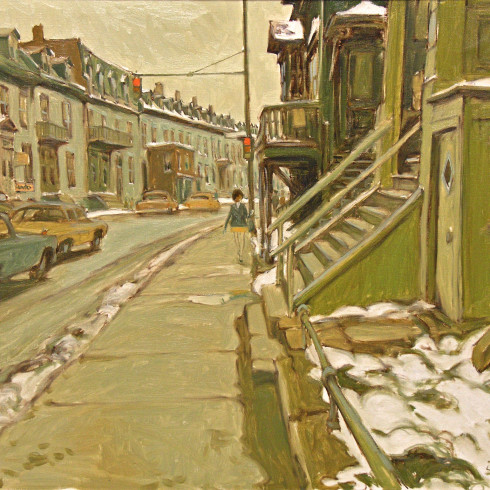


Drolet Street, Montreal, 1965
Oil on canvas board
12 x 16 in
30.5 x 40.6 cm
30.5 x 40.6 cm
This painting is presently on view at our Toronto gallery
$12,500
Inscriptions
signed, 'JOHN / LITTLE' (lower right); titled, signed and dated, ‘Drolet St. / Montreal John Little / ‘65’ (verso)Provenance
Walter Klinkhoff Gallery, Montreal
By descent, private collection, Toronto
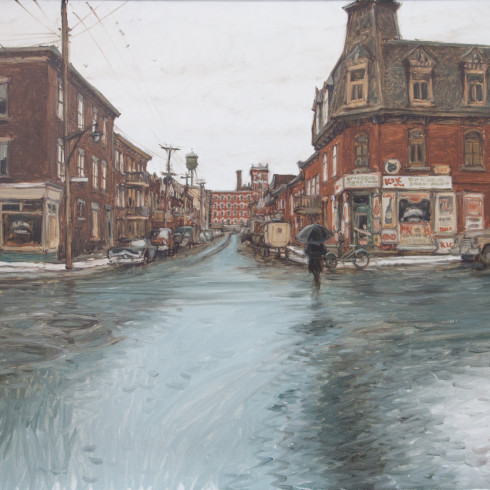
This view of Rue Drolet in Montreal’s Plateau neighbourhood is characteristic of the best of John Little’s compositions of this 1960s Post-Impressionist style. Lined with brick duplexes and triplexes, their exterior staircases, iron railings, and balconies forming a rhythmic lattice of diagonals and verticals, Drolet is typical of the city’s heritage Little wanted to preserve in paint.
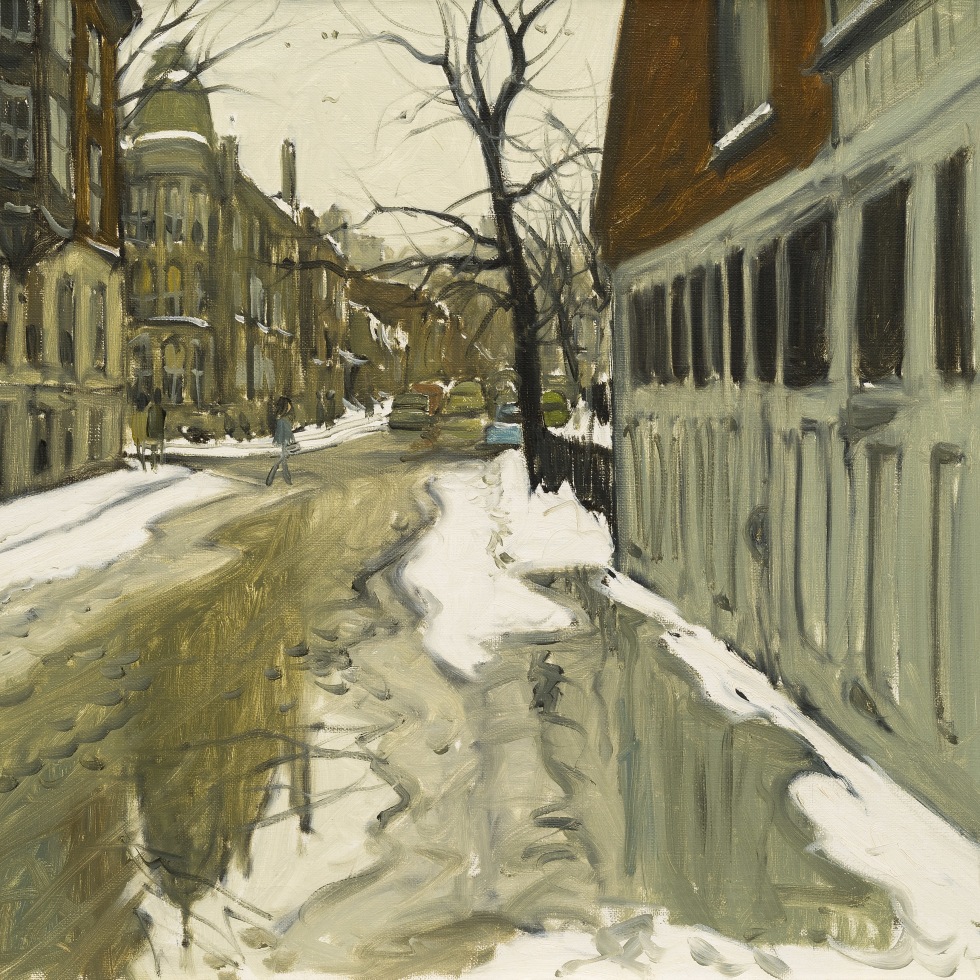
Little’s palette is muted—olive greens, greys, ochres, and brick reds—softened by the pale whites and creams of winter light. Unlike the treatment the artist employed some 6 or 7 years later, the brushwork is brisk and economical, suggesting movement and atmosphere rather than detail. The two girls chatting away just off center to the left, a couple walking in the distance parked cars and a milk wagon going up the street serve to reinforce his statement that this is where people live, “le quotidien”, one might say. Drolet Street, Montreal is an important and painterly example of Little’s commitment to recording the lived character of Montreal streets at a time of widespread and unfriendly urban transformation.
Little’s palette is muted—olive greens, greys, ochres, and brick reds—softened by the pale whites and creams of winter light. Unlike the treatment the artist employed some 6 or 7 years later, the brushwork is brisk and economical, suggesting movement and atmosphere rather than detail. The two girls chatting away just off center to the left, a couple walking in the distance parked cars and a milk wagon going up the street serve to reinforce his statement that this is where people live, “le quotidien”, one might say. Drolet Street, Montreal is an important and painterly example of Little’s commitment to recording the lived character of Montreal streets at a time of widespread and unfriendly urban transformation.