


Art canadien classique


Pacific Coast, 1961
40.6 x 50.8 cm
Inscriptions
signed and dated, ‘A. Lismer 61’ (lower left); signed, titled and dated. ‘A. Lismer - Pacific Coast - 1961’ (verso, on canvas fold)Provenance
Walter Klinkhoff Gallery Inc., Montreal
Private collection, Michigan
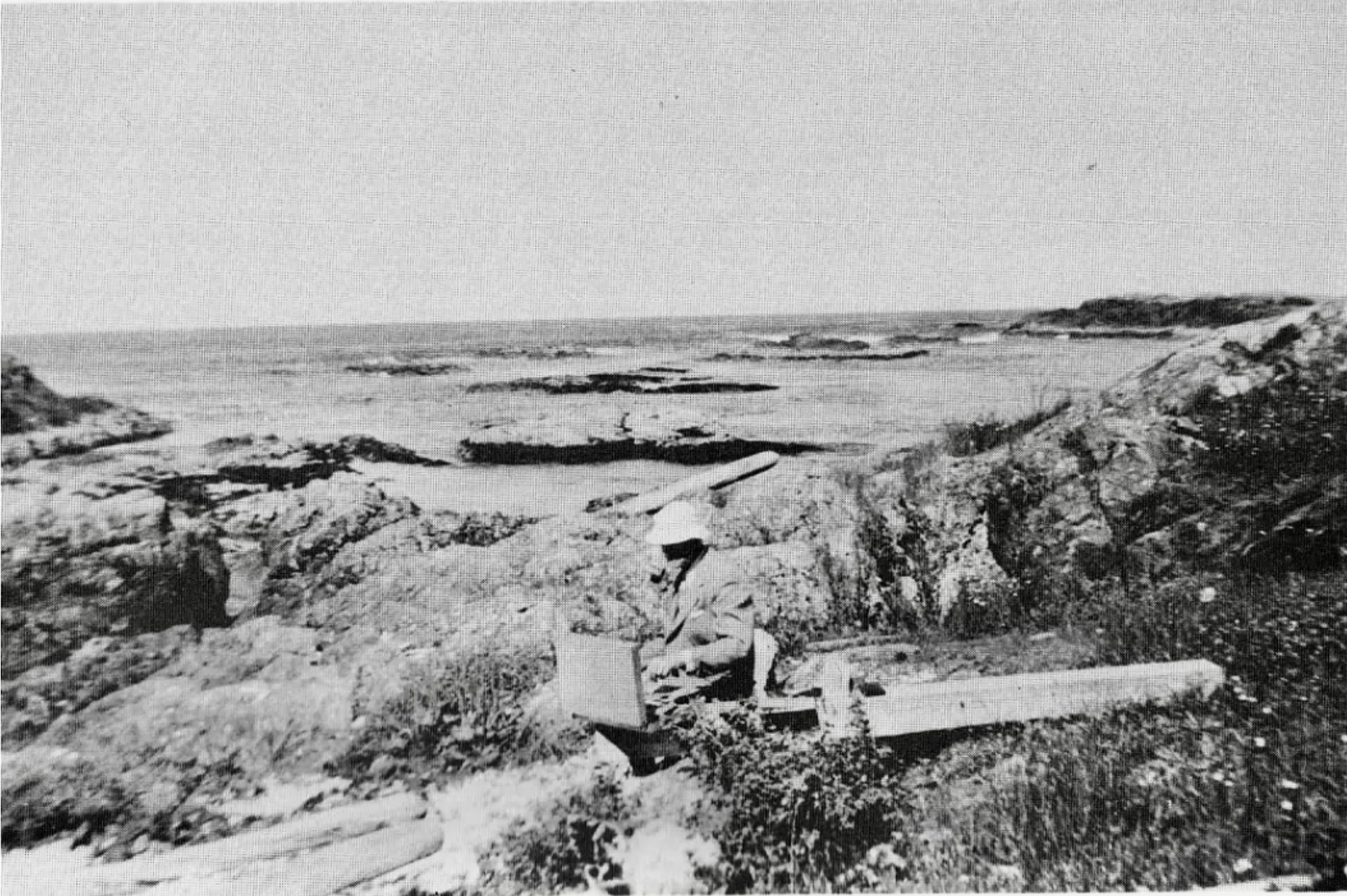
Arthur Lismer painting near Long Beach, 1958
(Source: longbeachwild.wordpress.com)
In 1951, after an important retrospective of his work in Vancouver and in Victoria, Arthur and Esther Lismer first visited the Long Beach area as guests of the owners of Wickaninnish Lodge. Located on the remote Pacific coast of Vancouver Island, between Tofino and Ucluelet, the original lodge is said to have had a spectacular site at Long Beach where the open ocean met the ancient rainforest. Their introduction to the area led to a new direction in his painting. The “language” of his painting evolved into a more personal expression, complex close ups of nature like Pacific Coast and other often reproduced subjects like a skunk cabbage or a piece of driftwood on a beach. The Lismers returned for 17 consecutive summers renting the same small cabin.
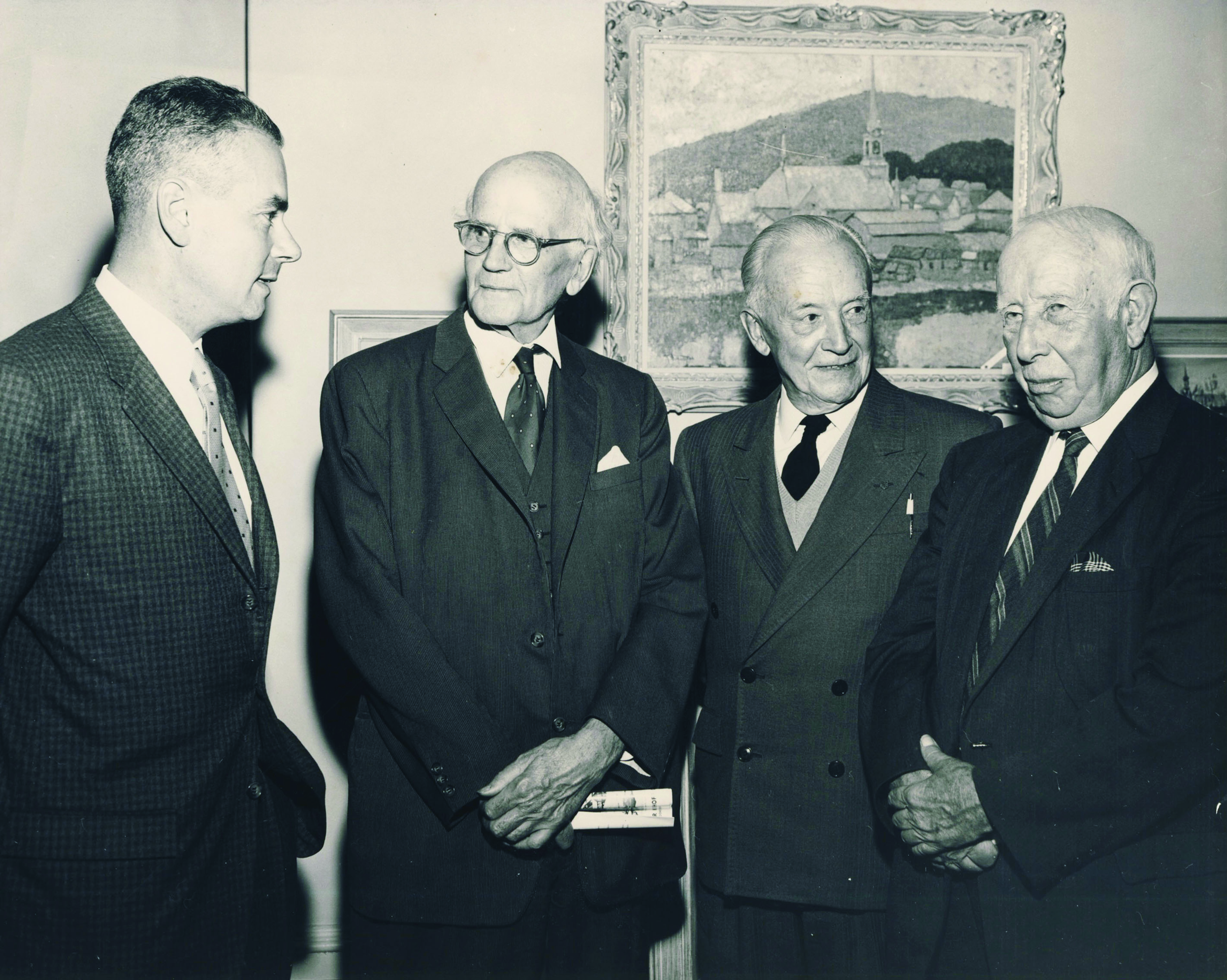
From left to right: Mr. Klinkhoff, Arthur Lismer, Edwin Holgate and A.Y. Jackson in the Walter Klinkhoff Gallery, 1962.
-----
Lismer’s painting Pacific Coast depicts the energetic whitecaps of the Pacific Ocean, likely near Long Beach, now part of the Pacific Rim National Park Reserve. The artwork, painted on canvas and adhered to a board, features an unfinished painting on the reverse, inspired by the coastal rainforest's magnificence.
Both the coastal waters and rainforest are significant aspects of Lismer’s legacy as an iconic Canadian artist.
Arthur Lismer was a frequent visitor to Canada's West Coast. Following his meeting with Emily Carr in 1927, he sketched with her below her home on Beacon Hill. Records show that after 1951, Lismer and his wife Esther often traveled west, with the Wickaninnish Inn, overlooking the Pacific Ocean near Tofino, as their destination. There, “Lismer lived in a small cabin, which in 1971 still displayed a stump of a canoe paddle, unofficially designating it as Lismer Cottage. The cottages were later torn down (around 1971) when Parks Canada took over the property to develop it into the Wickaninnish Interpretation Centre, which remains in operation today.” [1]
_________________________________
Footnote:
[1] John MacFarlane, "Arthur Lismer – Canadian Artist and Interpreter of the Sea," The Nauticapedia, 2012, https://www.nauticapedia.ca/Gallery/Arthur_Lismer.php (Accessed April 24, 2024).


